Conflict Market

Research Article in Marketing Theory “Inclusionary Labour: Theorizing…”

Please see below abstract from my colleague Hossain Shahriar and my new article in Marketing Theory:

Marketing and consumer research predominantly conceptualize inclusion and exclusion as dichotomous or merely coexisting, leaving their relationship undertheorized. This paper explores their dialectical interplay in market interactions through the experiences of migrant consumers. Drawing on Relational Dialectics Theory, we employ a contrapuntal methodological approach that integrates a semantic network analysis of the interpretive marketing and consumer research literature with a hermeneutic analysis of interviews with Bangladeshi immigrants in Sweden. Our findings identify four competing discourses that structure four key relational dimensions, generating corresponding experiences of inclusion and exclusion. These tensions persist as self-sustaining dynamics in which moments of inclusion and exclusion are relationally co-produced through ongoing discursive struggle. We conceptualize “inclusionary labor” as the disproportionate work that ethnically marginalized consumers undertake to be included. The study theorizes marketplace inclusion and exclusion as dialectically co-constitutive and reframes migrant consumer vulnerability as a relational condition that is often outsourced by markets to marginalized consumers.

To cite: Shahriar, H., & Ulver, S. (2025). Inclusionary labor: Theorizing the relationship between consumers’ inclusion and exclusion in the marketplace. Marketing Theory, 0(0). https://doi.org/10.1177/14705931251406915
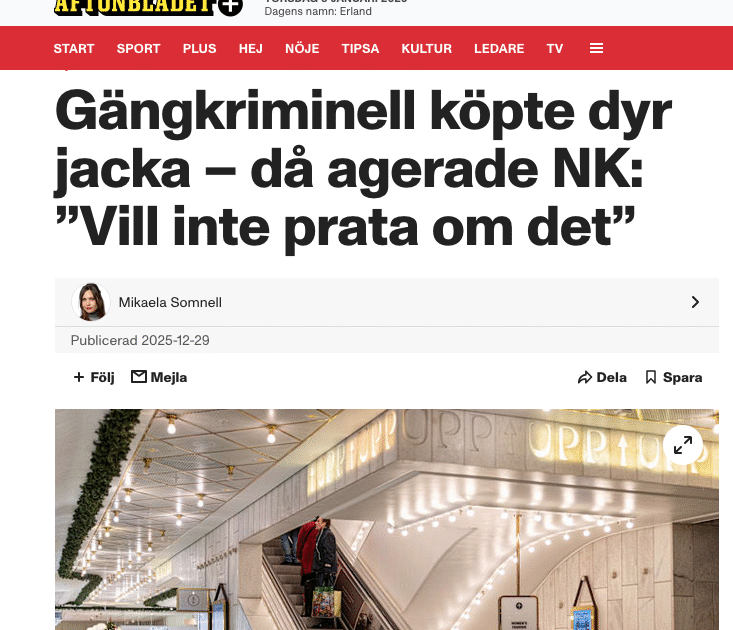

Interviewed in Aftonbladet: “Gang criminal bought expensive jacket — NK responds: “Don’t want to comment””

https://www.aftonbladet.se/nyheter/a/Pd35XR/skot-ihjal-en-pojke-i-skogas-bilden-fick-nk-att-sluta-ta-emot-kontanter

Reporter and Text: Mikaela Somnell

“After the murder, the 15-year-old shooter went to NK.

With the blood money, he bought an expensive jacket — prompting the department store to take action.

“This is sensitive for NK,” says Sofia Ulver, Associate Professor of Marketing at Lund University.”


Interviewed in Sydsvenskan “TikTok influencers promise luxury and millions through e-commerce — young people end up bankrupt”

Reporters and Text: Nellie Erberth and Anette Niklasson Grafik: Isak Aho Nyman

“They have no education from any business school, they haven’t attended a traditional university. That’s something many of these influencers like to point out. Drop that traditional university education — come with me and I’ll show you how to get rich fast”

Sofia Ulver emphasizes that what matters most to young people today is speed. She also argues that the state of the world helps explain why the pursuit of making a lot of money has become such a strong trend among the young.

‘If you grow up in a world like this, you see welfare states faltering, you see migrant flows moving across the globe with people on the run. War is very close — and getting closer all the time. In that situation, the imperative is to get rich quickly and to use whatever means are available,’

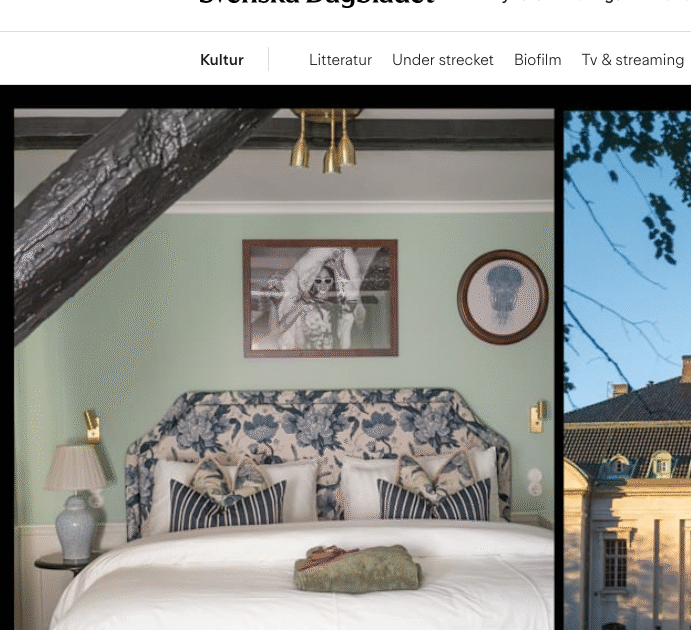
Interviewed in Svenska Dagbladet: “Here, the upper-class way of life is put on an assembly line”

https://www.svd.se/a/gwgOJJ/ellery-beach-house-och-maryhill-estate-overdad-for-medelklassen

Text: Marcus Lundblad-Joons. Photo: Staffan Löwstedt.
Published: 2025-11-02

Has the lifestyle of the upper class finally become something for everyone?
A rapidly expanding Swedish hotel chain may be one of the clearest signs that it has. To find out, SvD checked into a castle in Glumslöv.

Oh!

Sofia Ulver gropes for words as she looks out over one of the hotel’s many pool areas, where unusually wide, striped sun loungers are lined up in tiers, each accompanied by neatly folded parasols.