Conflict Market

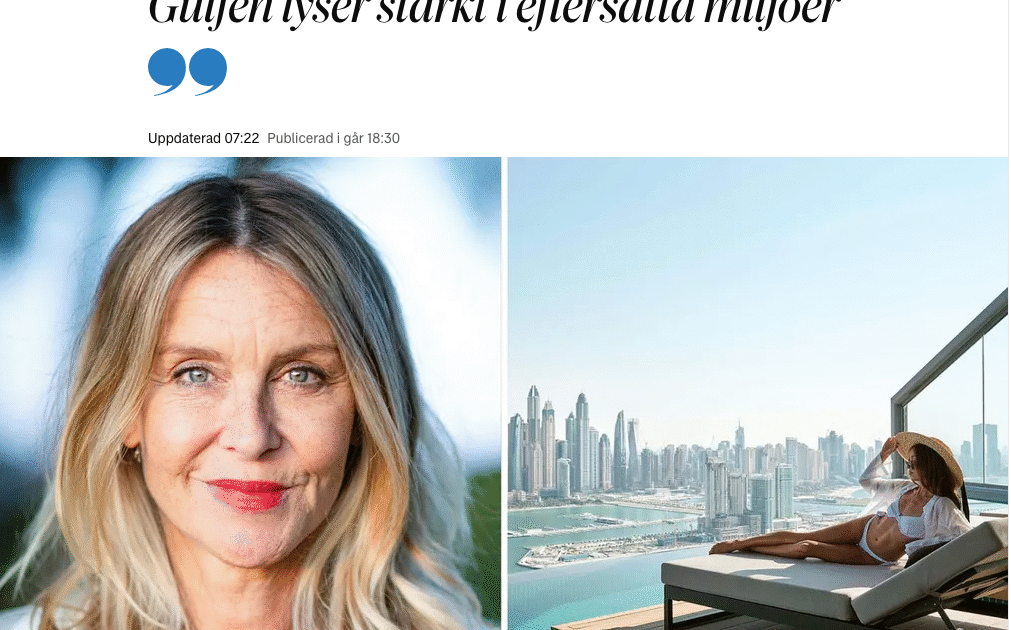
The Dubaian Dream under Siege: Essay in Dagens Nyheter

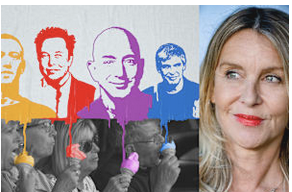
What will happen now that the American dream, not to mention the European welfare dream, are crumbling? For a while it looked like the “Gulfian” dream would take their place as the new grand narrative. And then came Trump’s war on Iran. Should the future in the Gulf states darken after the war, the dream will likely remain untouched. It will flow onward – to the next place where capital promises speed, spectacle, and limitless success. In this essay I explore why youth lose themselves in digital flows and utopian imaginaries.

Register for upcoming Symposium 22’nd April! “New Capitalism(s) & Violence”
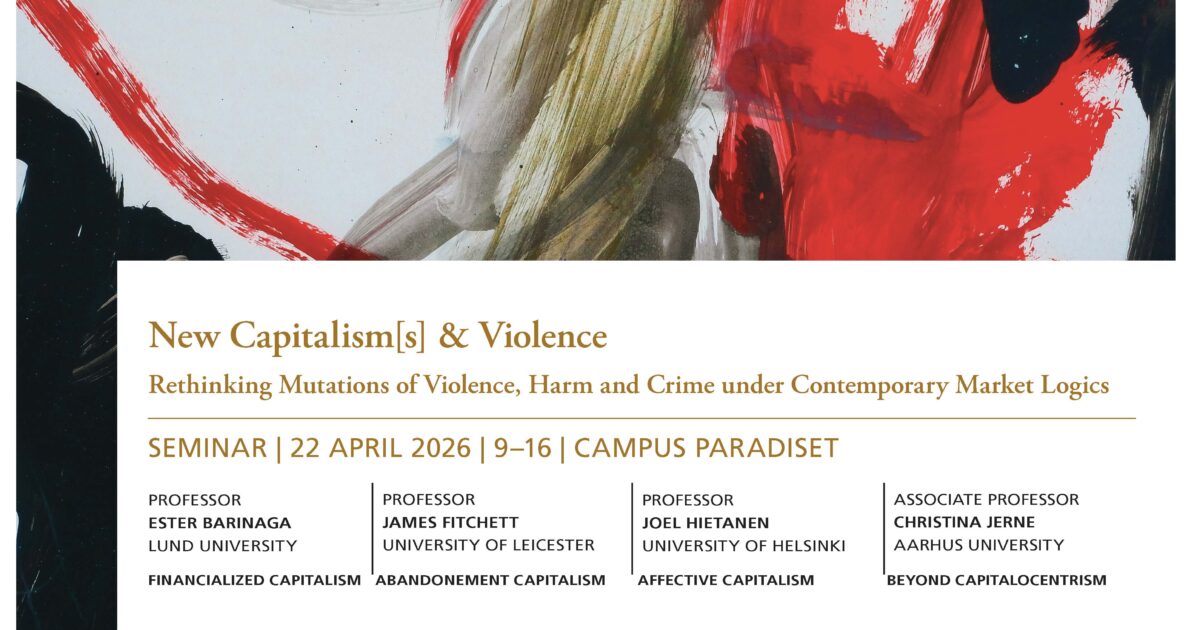
New Capitalism[s]& Violence: Rethinking Harm and Crime under Mutating Market Logics

How do contemporary market logics reshape violence, harm and crime?

Platform economies, gig work, extractive markets, stylized consumer cultures, and criminalized market formations coexist and overlap transnationally. Contemporary scholarship therefore increasingly speaks of multiple capitalisms rather than a singular capitalism. But what do these terms mean?

Join us on 22 April (09:00–16:00) at Campus Paradiset in Lund for the symposium “New Capitalism[s] & Violence”, bringing together international scholars and contributors beyond academia to explore how today’s forms of capitalism produce new configurations of power, precarity and crime.

Sign up here:

https://www.lusem.lu.se/calendar/new-capitalisms-violence

Please register in advance, as catering (lunch and coffee) will be arranged based on the number of confirmed participants.

The event is open to all and is co-organised by researchers at Lund University School of Economics and Management and the Faculty of Social Sciences at Lund University.


09.00 (sharp) – 12.30: Speakers on capitalism(s) and violence 

Keynote Speakers:

Financilized Capitalism

Professor Ester Barinaga, Lund University, LUSEM

Affective Capitalism

Professor Joel Hietanen, University of Helsinki, Finland

Abandonement Capitalism

Professor James Fitchett, University of Leicester in the UK

Beyond Capitalocentrism 

Associate Professor Christina Jerne, Aarhus University


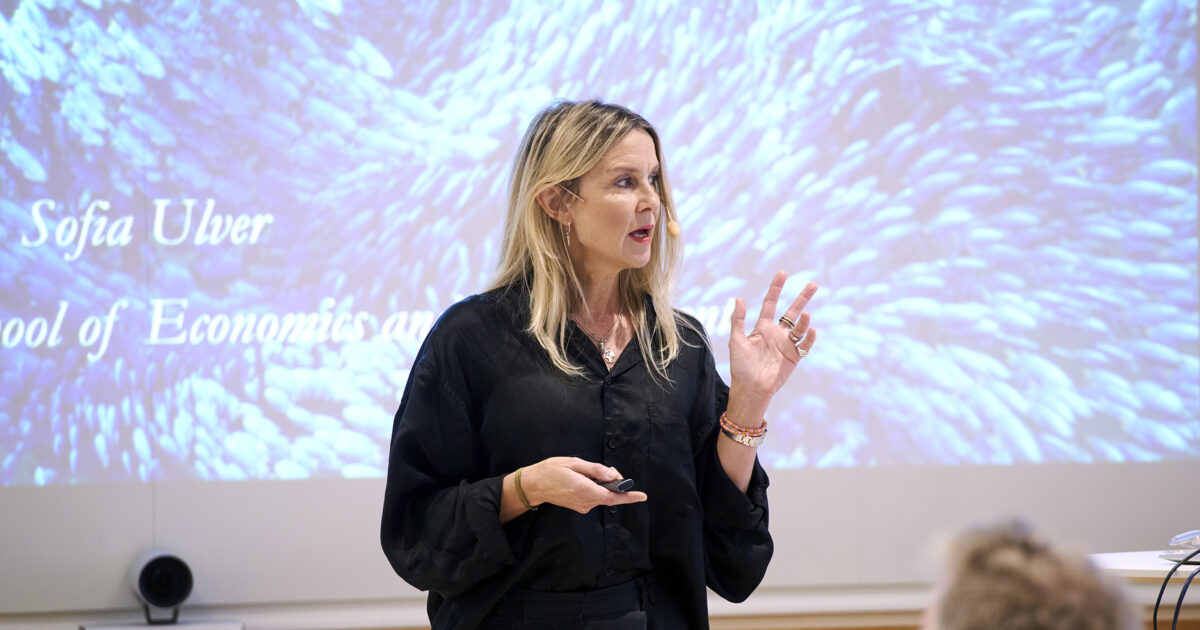
Moderator: Sofia Ulver


12.30– 13.30 (sharp): Lunch


13.30 (sharp) – 16:00: Flash talks and Panel, deeper into how capitalism(s) connect to specific violence.

Flash talks and Panel Debate:

Gig Economy and GangstersDavid Sausdal, Cultural Criminology, LU

Racial Capitalism : Peter Svensson, LUSEM,

Algorithmic Capitalism: Pasko Kisić-Merino, Researcher at PLEDGE Horizon Project, Department of Political Science at Lund University

Beyond Capitaliocentrism: Cristina Jerne

Financialized Capitalism: Ester Barinaga


Moderator: Mia-Marie Hammarlin


Organisers:

Sofia Ulver, Associate Professor in Consumer and Marketing Studies, Lund School of Economics and Management

Erik Hannerz, Associate Professor in Cultural Criminology, Department of Sociology, Lund University

David Sausdal, Associate Professor in Cultural Criminology, Department of Sociology, Lund University


Funders:

Riksbankens Jubileumsfond (Conflict Market, Ulver)

Rockwool Foundation (GANGREC, Sausdal & Hannerz)
 

New Taste Regimes in Conflict

In today’s Svenska Dagbladet, Ylva Lagercrantz Spindler interviews me about new and old regimes of taste in the middle and upper classes—and how they manifest in consumption. Climbing the social ladder is certainly no easy task today!

In the article, my “old” research area on status and taste in the privileged middle class (see sofiaulver.se) is brought together with my newer work on marginalized groups and areas (see this site)

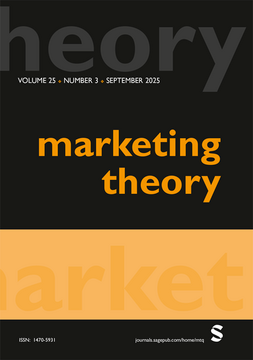
Research Article in Marketing Theory “Inclusionary Labour: Theorizing…”

Please see below abstract from my colleague Hossain Shahriar and my new article in Marketing Theory:

Marketing and consumer research predominantly conceptualize inclusion and exclusion as dichotomous or merely coexisting, leaving their relationship undertheorized. This paper explores their dialectical interplay in market interactions through the experiences of migrant consumers. Drawing on Relational Dialectics Theory, we employ a contrapuntal methodological approach that integrates a semantic network analysis of the interpretive marketing and consumer research literature with a hermeneutic analysis of interviews with Bangladeshi immigrants in Sweden. Our findings identify four competing discourses that structure four key relational dimensions, generating corresponding experiences of inclusion and exclusion. These tensions persist as self-sustaining dynamics in which moments of inclusion and exclusion are relationally co-produced through ongoing discursive struggle. We conceptualize “inclusionary labor” as the disproportionate work that ethnically marginalized consumers undertake to be included. The study theorizes marketplace inclusion and exclusion as dialectically co-constitutive and reframes migrant consumer vulnerability as a relational condition that is often outsourced by markets to marginalized consumers.

To cite: Shahriar, H., & Ulver, S. (2025). Inclusionary labor: Theorizing the relationship between consumers’ inclusion and exclusion in the marketplace. Marketing Theory, 0(0). https://doi.org/10.1177/14705931251406915

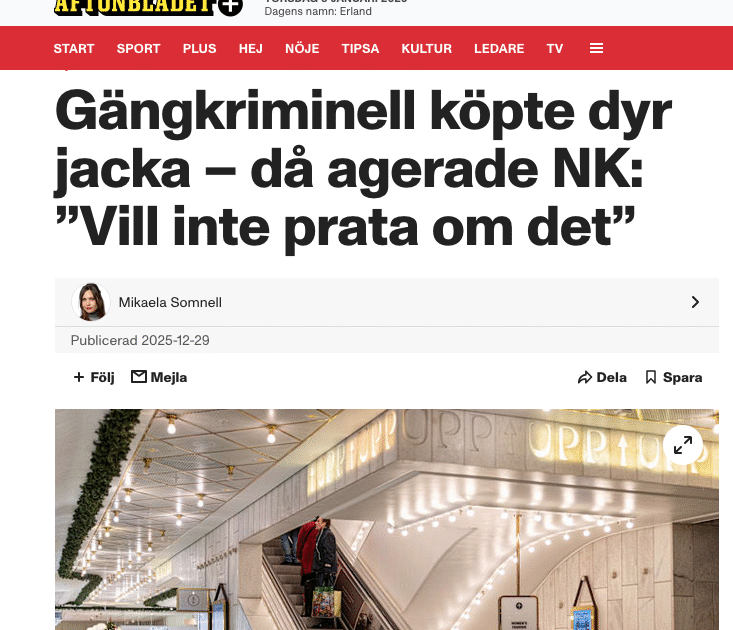
Interviewed in Aftonbladet: “Gang criminal bought expensive jacket — NK responds: “Don’t want to comment””

https://www.aftonbladet.se/nyheter/a/Pd35XR/skot-ihjal-en-pojke-i-skogas-bilden-fick-nk-att-sluta-ta-emot-kontanter

Reporter and Text: Mikaela Somnell

“After the murder, the 15-year-old shooter went to NK.

With the blood money, he bought an expensive jacket — prompting the department store to take action.

“This is sensitive for NK,” says Sofia Ulver, Associate Professor of Marketing at Lund University.”


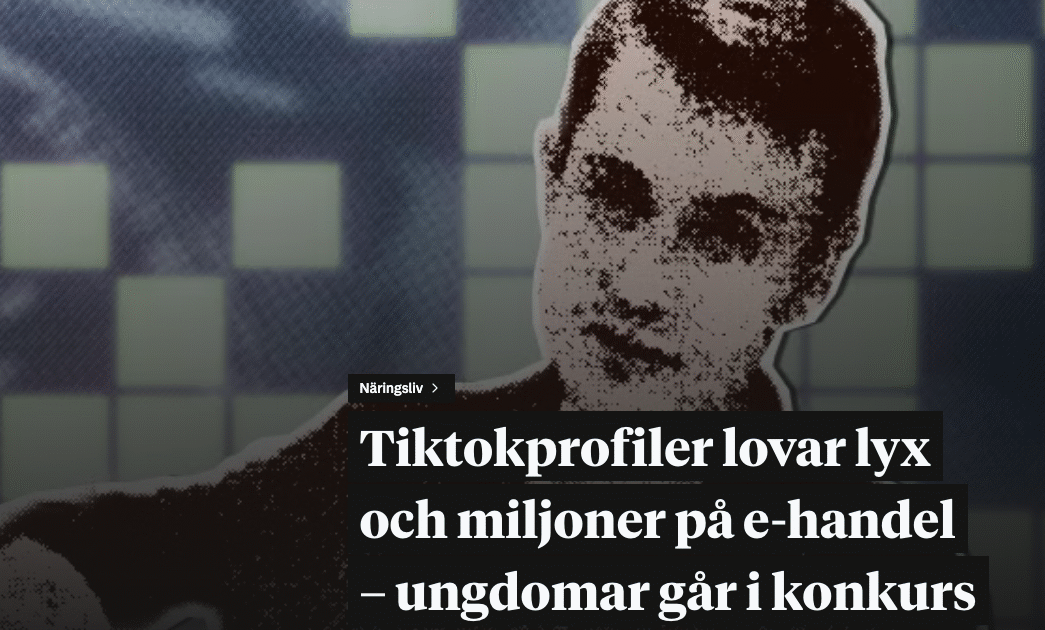
Interviewed in Sydsvenskan “TikTok influencers promise luxury and millions through e-commerce — young people end up bankrupt”

Reporters and Text: Nellie Erberth and Anette Niklasson Grafik: Isak Aho Nyman

“They have no education from any business school, they haven’t attended a traditional university. That’s something many of these influencers like to point out. Drop that traditional university education — come with me and I’ll show you how to get rich fast”

Sofia Ulver emphasizes that what matters most to young people today is speed. She also argues that the state of the world helps explain why the pursuit of making a lot of money has become such a strong trend among the young.

‘If you grow up in a world like this, you see welfare states faltering, you see migrant flows moving across the globe with people on the run. War is very close — and getting closer all the time. In that situation, the imperative is to get rich quickly and to use whatever means are available,’

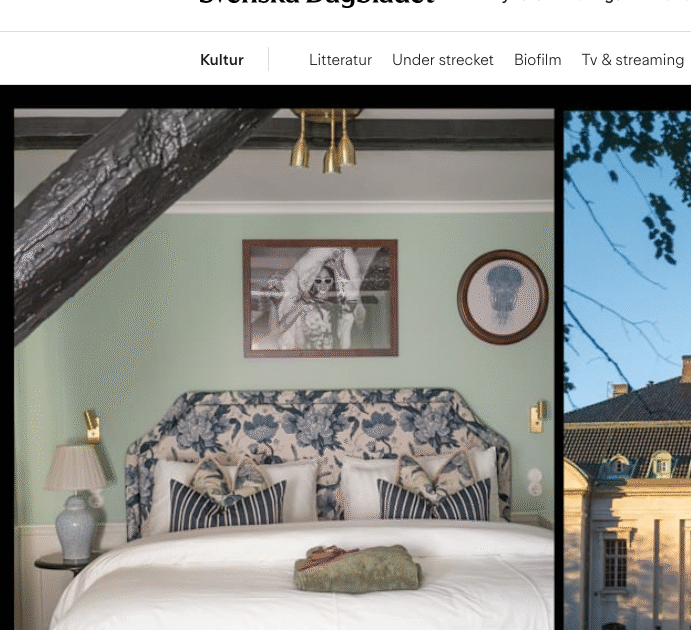
Interviewed in Svenska Dagbladet: “Here, the upper-class way of life is put on an assembly line”

https://www.svd.se/a/gwgOJJ/ellery-beach-house-och-maryhill-estate-overdad-for-medelklassen

Text: Marcus Lundblad-Joons. Photo: Staffan Löwstedt.
Published: 2025-11-02

Has the lifestyle of the upper class finally become something for everyone?
A rapidly expanding Swedish hotel chain may be one of the clearest signs that it has. To find out, SvD checked into a castle in Glumslöv.

Oh!

Sofia Ulver gropes for words as she looks out over one of the hotel’s many pool areas, where unusually wide, striped sun loungers are lined up in tiers, each accompanied by neatly folded parasols.

Revanchist Consumer Activism

In the article “Fearing separation from capitalist paternity” the journal Consumption Markets & Culture  we examine how American anti-gender activists opposed Disney’s shift from its conservative, family-oriented brand image. We (first author Floris de Krijger and Professor Patrizia Zanoni at Hasselt University, Belgium) argue that this campaign is driven by infantile fears of losing the ideo-affective guardianship conservative brands have historically offered to privileged consumer groups. These consumer activists aim to resolve this perceived threat of brand abandonment through anti-brand revenge. You can get it through this eprint link below. Lund University School of Economics and Managementdisney

https://www.tandfonline.com/eprint/NCCK5FJGN4ZTTPFMUD6K/full?target=10.1080/10253866.2025.2511970

Presenter x 2 at CCTC2025, King’s College, London

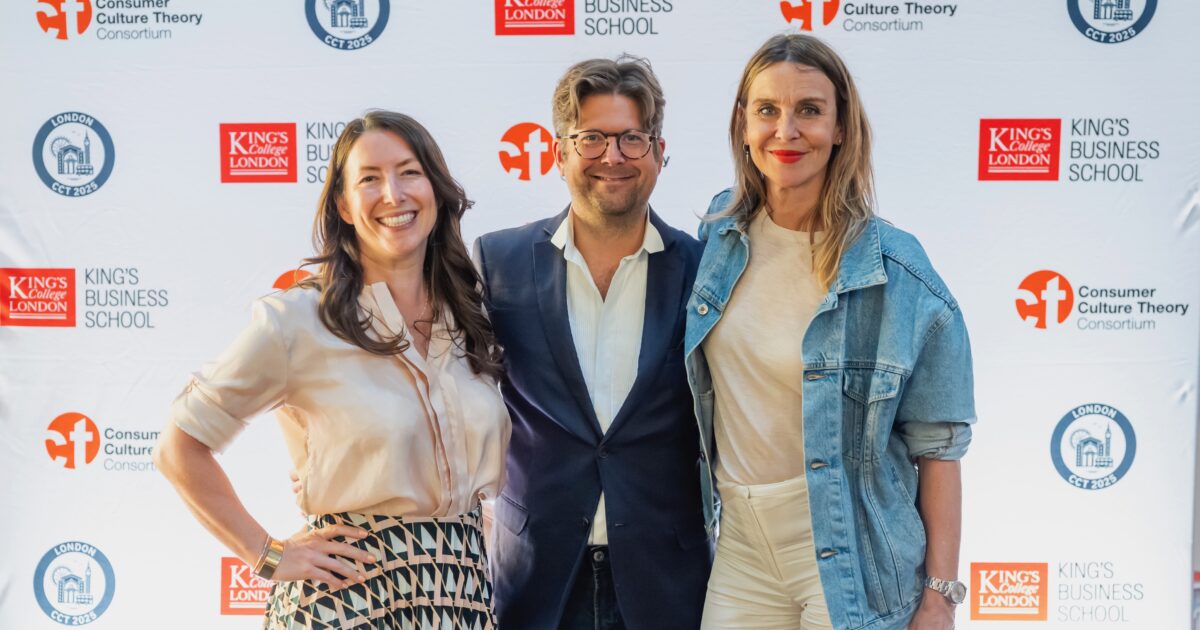
24-17 June 2025: Presented two papers at the CCT conference 2025 held at King’s Business School at King’s College, London. Brilliantly organized by @gillian brooks and @katharina husemann. What a city, such nice venues, great sessions, international colleagues and such great weather even!

In images with @jonbertilsson nd @caryseganwyer. I presented about the “Politics of Publics” (Conflict Market case Sportswashing) together with @andrealucarelli (@hossainshahriar could unfortunately not be with us this time) and about “Toxic Care” in gangster rap and gangster culture with @niklasvallström, the special session organized by @jonatansödergren and with @simonblythe and @mikaelandehn


Presenter about Žižek’s Ideology Critique at the Canon of Classics

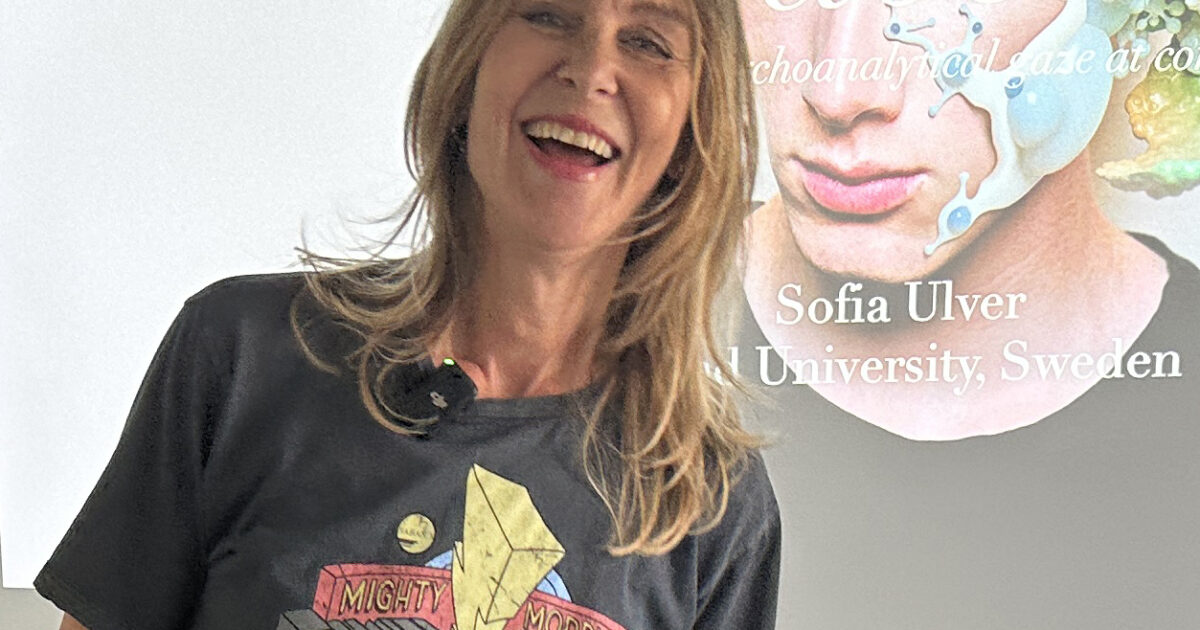
19’th of June 2025: Invited by Professor Søren Askegaard at the University of Southern Denmark, I presented my take on the Slovenian philosopher Slavoy Žižeks’ importance in critical marketing studies and CCT (consumer culture theory). The weeklong course is a bi-annual PhD course which takes place in Odense, Denmark, and was exactly the same course as I took 2004 and has been a CCT’er since then. Thank you Søren, and everyone else who presented (@dannikjeldgaard, @jeffmurray, @ianwoodward, @olgakravets). And not least, thank you to all the students! So many and so bright!

Consumption & Violence: Guest talk at Stockholm Business School, Stockholm University

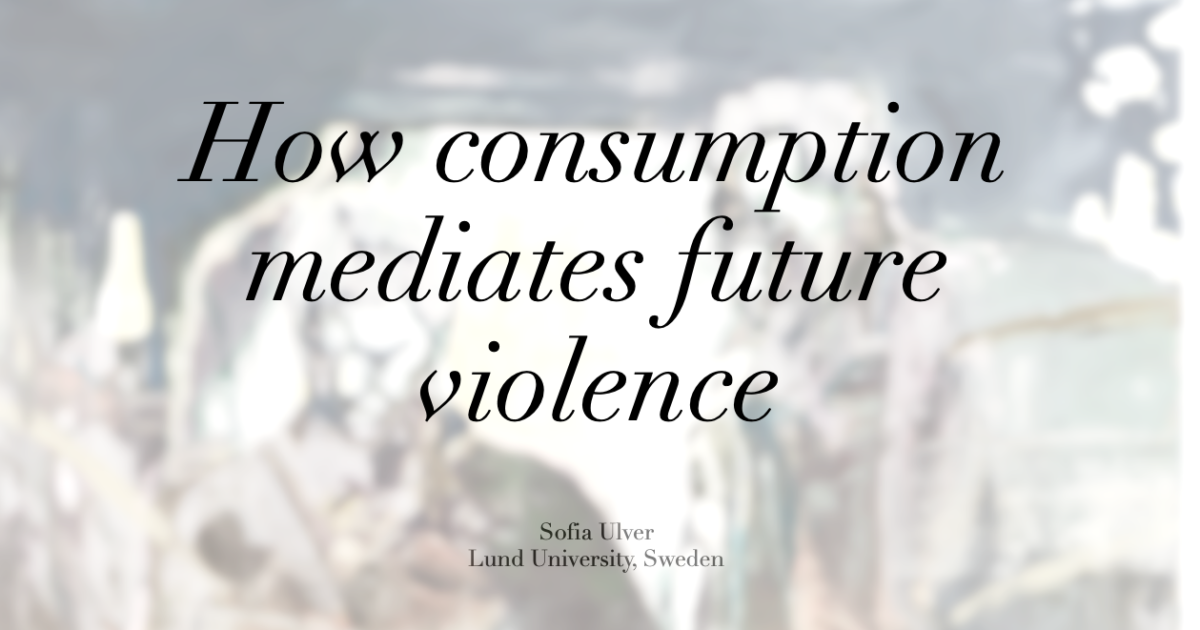
10’th of June 2025: Invited by @susannamolander and the business administration group at Stockholm Business School at Stockholm University I held a talk about how consumption can mediate future violence. I got really great and helpful comments and suggestions to take this project further into various publications. Very stimulating audience. This is part of the @Riksbankens Jubileumsfond funded project “Conflict Market”.

Opponent “The Cynical Condition in Market and Consumer Society”

21’st of May 2025. I acted opponent at PhD candidate Mattias Hjelm’s “Mock-PhD-Defence” of his PhD dissertation “The Cynical COndition in Market and Consumer Society”. The cynical condition is part an dparcel of the conflict market as I see it. Enjoyed reading this. Good discussion, and @Mattias Hjelm made a strong defense. Supervisors @Hans Kjellberg and @Magnus Söderlund.

“Ontological Conflicts in Consumer Culture Theory” NFF and Stockholm Business School

19’th of May 2025 Lecturer at Stockholm Business School’s Nordic Academy of Management (NFF)-funded PhD course on “Nordic Consumer Culture Theory”. Talked about the ontological shifts and conflicts within the field, but also how the focus on conflict per se has intensified in research on consumer culture.

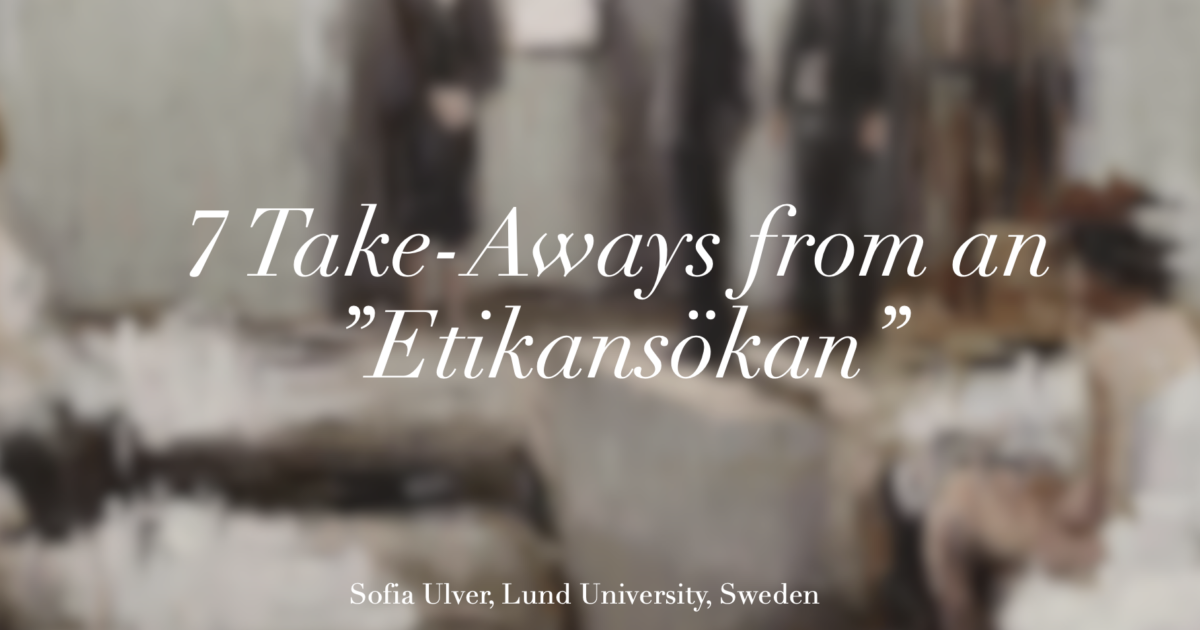
“Seven Take-Aways from an Ethics Application” Guest Lecture at University of Gothenburg

9’th of May 2025 Invited by Professor @Benjamin Hartmann at the Department of Business Administration @University of Gothenburg, to talk to the department about the Ethics Application process for my “Conflict Market” project, as this was a very sensitive research project in terms of ethics and it needed a lot of work.. It became a really interesting conversation. Good luck!

Sydsvenskan Podcast Interview: “Can the food giants be shamed to lower their prices”

19 March 2025 Interview in Sydsvenskan PODCAST: “Can the food giants be shamed to lower their prices” https://podme.com/se/avsnitt/7022520/

“Matpriserna skenar – igen. Förra gången var det på grund av pandemin, kriget i Ukraina och inflationen. Men varför ökar de nu? På sociala medier organiseras just nu en bojkott mot de tre svenska matjättarna för att få dem att sänka priserna. Men kommer det få någon effekt?”

Med: Sofia Ulver, Kevin Rex, Gustav Wirtén och Sally Wahlstedt
Producent: Gustav Wirtén
Ansvarig utgivare: Jonas Kanje


SVT National Television, “Boycott against the grocery chains”

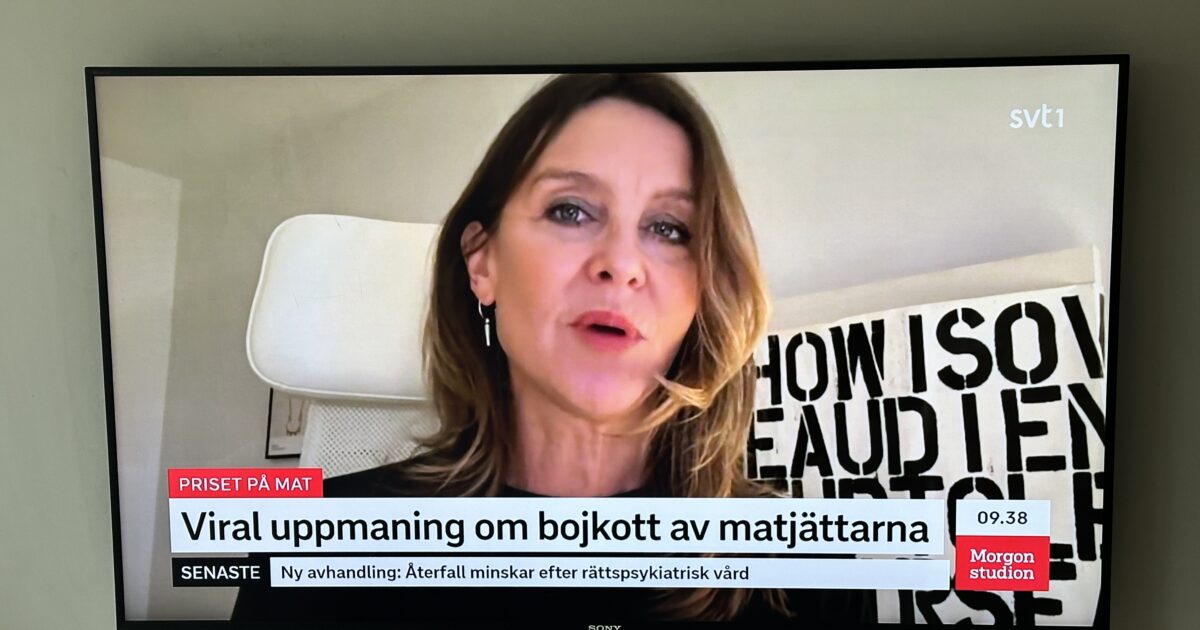
28 February  2025: Swedish National TV: SVT, SVT Morgonstudion, Live Interview, “Boycott against the grocery chains” https://www.svt.se/nyheter/inrikes/experten-sa-kan-bojkotten-paverka-matjattarna

TV4 and Dagens Nyheter (DN) Interviews: “Swedes call for boycott of American commodities and brands”

28 February 2025: Swedish National Newspaper: DN (Dagens Nyheter) Interview Swedes call for boycott of American commodities and brands” https://www.dn.se/ekonomi/svenskar-uppmanar-till-bojkott-av-amerikanska-varor/

Svenska Dagbladet, Interview “Boycott of grocery chains -the industry strikes back”

27 February 2025  Swedish National Newspaper: Interview https://www.svd.se/a/dRQ6Wq/bojkott-av-matbutiker-planeras-branschen-slar-tillbaka

Sydsvenskan, Interview “Large boycott against the food giants: “a sort of cartell””

16 March 2025

https://www.sydsvenskan.se/artikel/stor-bojkott-mot-matvarujattarna-en-sorts-kartell/

Swedish Regional Newspape Sydsvenskan

The Conflict Market and Foodie Culture

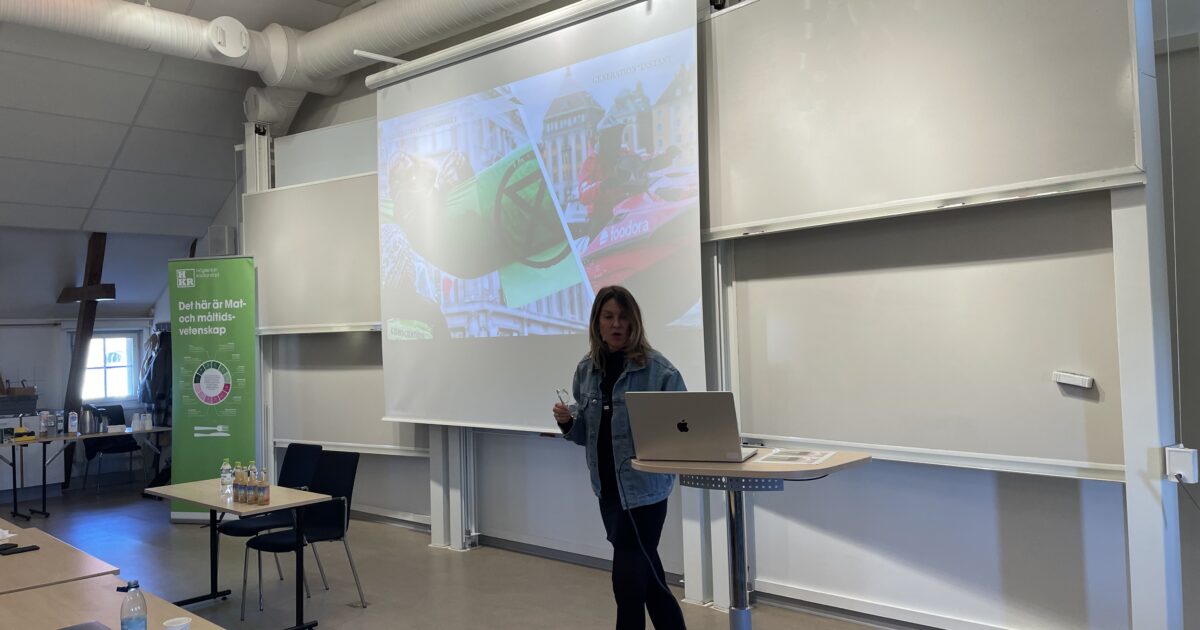
21 March 2025, At their “Networkday” I was invited by Kristianstad University (@HKR) to speak about the “trends” in contemporary foodie culture (the trend driving consumption culture of food) to a group of food industry representatives, gastronomists, alumni and partners to HKR. I focused on how glocal cultural, social and geo-political tensions result in specific kinds of produce choices, practices around food, and places of choice to consume food. Other speakers were @Axel Welinder, faculty in Business Administration at HKR who spoke about how consumer (do not) translate their intentions in practice in their choices of Swedish produced food produce, and @Adam Strömberg (gastronomist and  Food and Beverage Coordinator at the Sweden Rock festival) who spoke about his journey as gastronomist.

“Plant versus Cow: Conflict Framing ..” Research Article in JMMK

In this article I and Christian Koch explore and identify the way famous brands (in this case Oatly) amplify and capitalize on conflict in their advertising. Here the orchestrated conflict is between an animal-based food industry framed as corrupt and misogynist, and a plant-based food industry framed as wholesome and fair. This is the abstract:

“In this article we focus on the cultural mechanisms of market evolution accompanying the marketplace discord between a market actor and a dominant industry. We situate our analysis in the intersection between marketing and institutional theory and engage specifically with the constructs of legitimacy and framing strategies, but also with Chantal Mouffe’s political philosophy concept of agonistics. To better understand the blurry impact of market-driven activism and conflict on the shaping of markets, we use the ongoing “milk-war” between plant- versus animal-based drink producers as backdrop, and empirically explore how a market actor and their supporting institutional actors frame a previously legitimate industry in an attempt to delegitimize it, without sacrificing its consumer market. We find a rhetorical juggling-act of attempted legitimization of the market alternative and delegitimization of the status quo, where the intricacy of framing strategies constitutes what we call conflict framing. In line with the market-critical fundaments of agonistics, this conflict framing can work to (partly) delegitimize the status quo industry and to relegitimize its market at the same time, but cannot radically disrupt the system. Drawing from research predicting a growing absorption of politicized conflict by the market in general, we problematize and critique a potential rise in presence of marketmediated conflict framing. Our insights contribute to ongoing conversations on market evolution, markets for alternatives, ethical consumption and the ideological functioning of markets.”

“Tickling Tensions” Research Article in MT

In this article I go into the manifestations of what I later, in the “Conflict Market”, call the “neoblue” and “neogreen” movements  and explore how “woke” branding gives fodder to the fantasies of the “neobrown” movement. This is the abstract:

“This article explores why cultural branding – ideo-affective market communication addressing intense political tensions – paradoxically seems to lead to political inertia rather than political mobilization. I critically analyse advertising addressing political tensions related to race, ethnicity and immigration, but instead of only following the traced-out trajectory of postcolonial theory, I use the lens of Žižek’s radicalized Lacanian psychoanalysis and treat the therapeutic visuality in cultural branding as ideological fantasies of the market’s multicultural imaginary. Through critical visual methodologies, I situate four ‘multicultural’ commercials in their culture- and idea historical contexts, and juxtapose a postcolonial with a Žižekian reading for each of them. I come to argue that the market’s multicultural imaginary (unconsciously) serves important ideological functions in sustaining the political status quo not foremost because it placates anxiety, but because it doesn’t. Tapping into previous discussions in critical marketing on fetishistic disavowal and inversion, I offer yet another explanation. The political inertia following from ideo-affective dimensions of cultural branding does not primarily come from therapeutic sedation, but from the opposite, namely the parallax object’s upholding of gruesome tension and suspense; a fetishistic tickling. This article ends by critiquing the compulsory use of postcolonial theory in research on racial and ethnic relations. From the Žižekian reading, it appears that the postcolonial gaze is now a punishing agency like any dominant ideology, where the social inequality of global capitalism is deemed a more bearable alternative than the traumatic horror of visible racism, which, subsequently, closes the circuit from radical politics.”


“Political Ideology in Consumer Resistance” Research Article JPP&M

This article, which I published together with Christofer Laurell in Journal of Public Policy & Marketing, is the first of my publications that comes to lead up to “Conflict Market”  in that it gives some depth regarding what kinds of political ideologies that lurk behind various consumer resistance movements., especially what I later call the neobrown ideoscape in consumer culture. This is the abstract:

“Political ideologies of the far-right are gaining ground in world politics and culture, not least by way of market forces. It has therefore become urgent to understand how these ideologies manifest themselves in the fields of marketing and consumption at a sociocultural level. The authors explore the discursive efforts in far-right consumer resistance to advance a political agenda through protests directed at brands’ multicultural advertising and analyze how these consumers conceptualize their adversaries in the marketplace. In contrast to previous framings of adversaries identified in consumer research, where resistance is typically anticapitalist and directed toward firms’ unethical conduct or the exploitation by the global market economy per se, the authors find that the following discursive themes stand out in the far-right consumer resistance: the emphasis on the state as main antagonist, the indifference to capitalism as a potential adversary, and overt contestation of liberal ethics. The article concludes with a discussion of research contributions as well as the public policy and marketing implications in light of a growing far-right consumer culture.”


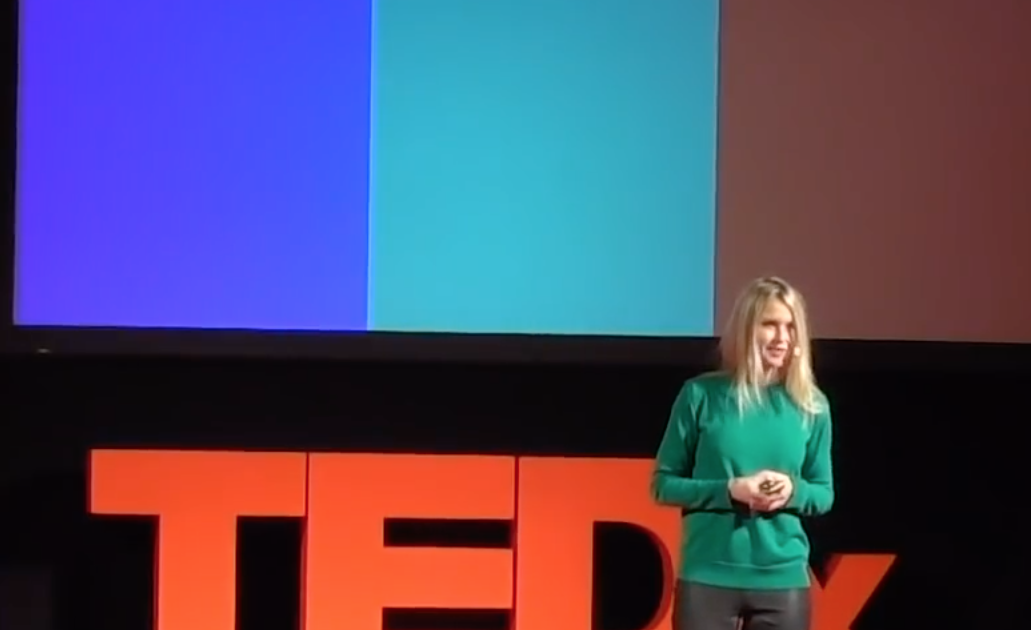
My TEDx Talk on “How Consumption Promotes Political Visions” January 2019

This TEDX talk was my first official talk about the ‘Conflict Market’.

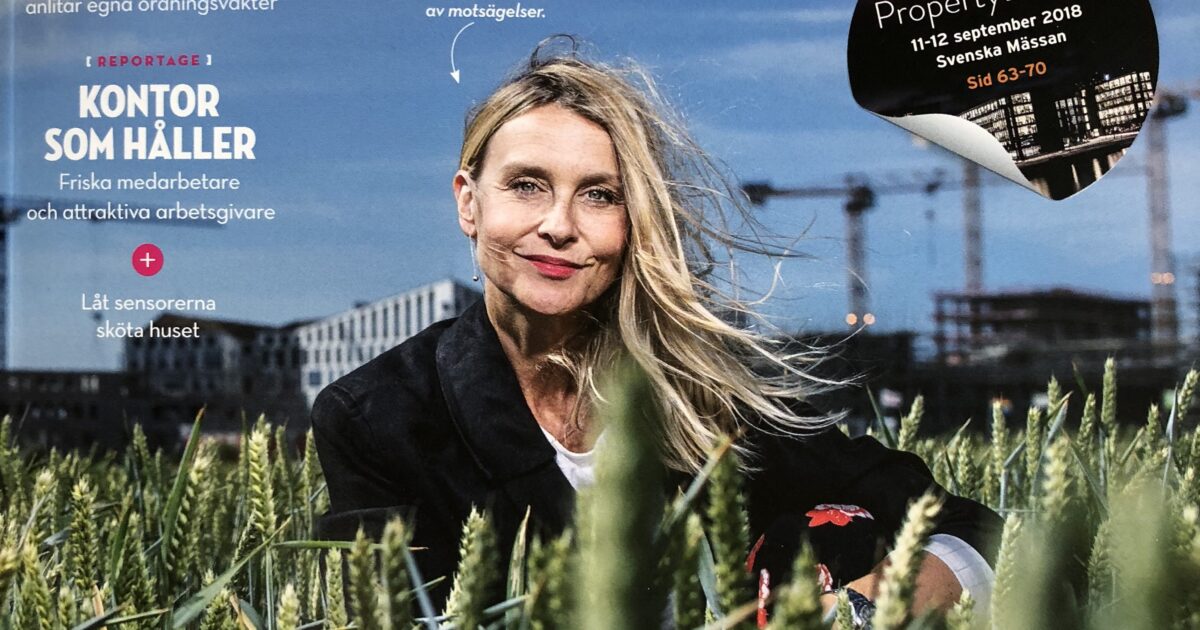
The Era of Conflicting Megatrends, Property Expo, Gothenburg, Sep 2018

In this presentation I talk to large real estate companies, investors, politicians and retailers about conflicting megatrends in society  that influence the way we live, consume, produce, innovate (and vote!). I frame the most central conflicting logics as Trust Economy vs. Attention Economy.

“The Future Political Role of Brands” Kindred Group Summit, Milan, Italy, May 2018

Regional-futures-trend-workshop-gothenburg-sofia-ulver

What responsibility does a brand have in the larger society? How can brands in historically stigmatized and “problematic” industries (such as gambling) think of their own existence, and navigate in an increasingly critical but also addicted consumer society?

AdDay 2017: “From Consumer to Activist,” May 11, Stockholm

At the bizzy wizzy AdDay, for Sweden’s various brand owners to meet and get inspired, I spoke about the interesting shift in roles where both consumers AND companies together become activists. Hence, the market increasingly becomes an arena for political positioning. Where national political parties (unfortunately) fail to influence the globalized world, consumers (unfortunately) have to lean more and more upon other actors to represent them. This is where the new branding paradigm comes in; brands and consumers in a symphonic co-play in political activism.

“Declining Middle-Classes and Consumption”, Session Organizer at the 3’d ISA Forum 2016, Vienna, Austria

At one of the world’s most renowned conferences within sociology (the 3’d international Sociological Association Forum: “The Futures we Want: Global Sociology and the Struggles for a better world)  within Jean-Pascal Daloz’z research committee on comparative sociology, I organised a session on the shrinking of the middle-classes and what consequences this has for classical theories on consumption. Took place in Vienna, Austria, 10-14 July, 2016. Very exciting papers were presented, e.g. by Professor Louis Chauvel, and the room was packed. Not only by audience but also with discussions.

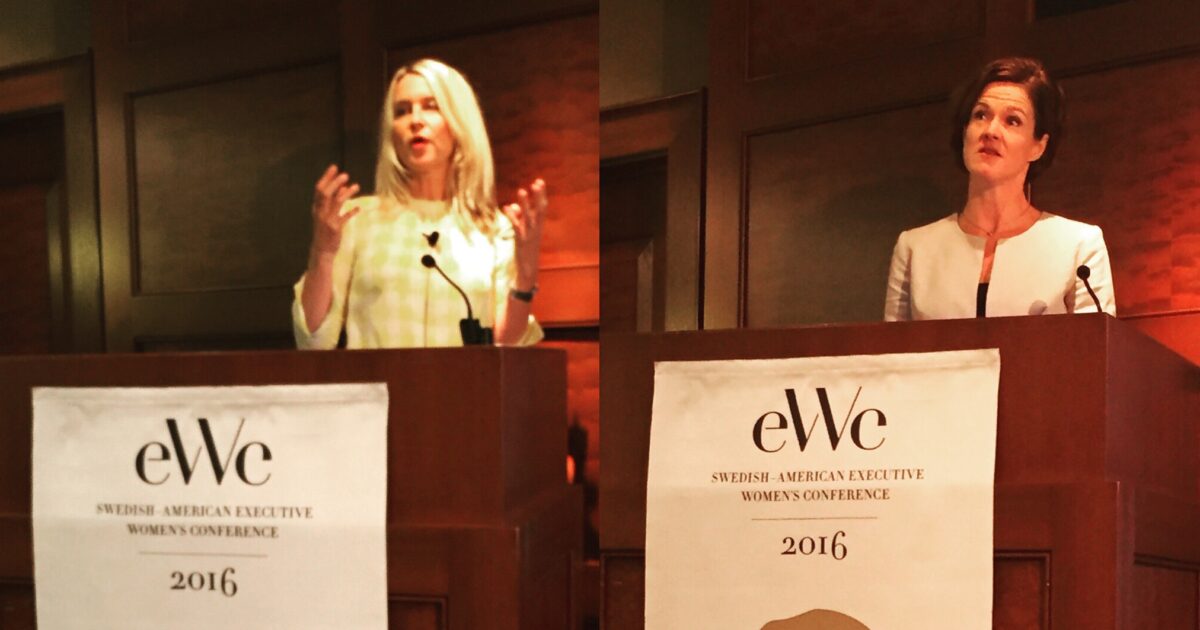
Keynote at “Is there a Future for the Future?”, New York, USA, May 2016

For the second year I was invited to speak as keynote at the Swedish-American Executive Women’s Forum. 2016 the theme is “Is there a Future for the Future?” and I spoke about where we were, are, and are heading in terms of gender in consumer society. Other co-speakers were  Jay Newton-Small (TIME journalist and author),  Anna Kinberg Batra ( leader Sweden’s Moderate Party), Adiba Barney (CEO, Silicon Valey Forum) and Linda Björk (author and speaker).  Arranged by the Swedish-American Chamber of Commerce, and hosted by PwC, New York.

Status movements- Published in European Journal of Marketing 2014

In an economically polarizing world (Piketty 2013), with a growing “precariat” (Standing 2011), previously middle-class consumers around the world increasingly experience that their status position is not as guaranteed as it used to be. This calls for research which explores these experiences of status movement and how it influences consumption. In this article I and Jacob Ostberg set out to do so, and the article is published in European Journal of Marketing 2014 vol 48 (5/6).